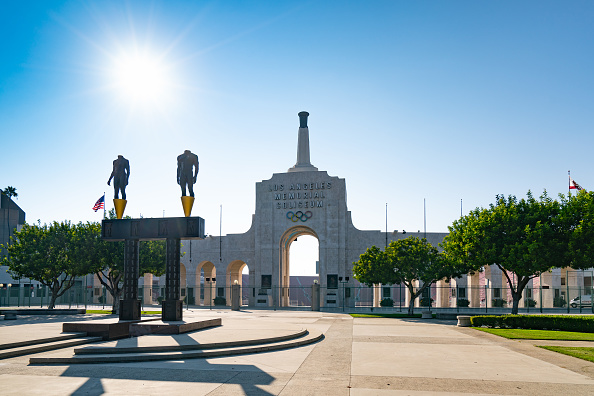
As the Olympic flame dims in Paris, attention shifts to Los Angeles, which will host the 2028 Summer Olympics. Los Angeles will be the third city, after London and Paris, to host the Olympics three times, having previously held the Games in 1932 and 1984.
Organisers are focusing on sustainability by reusing existing venues rather than constructing new ones.
The 2028 Olympics will feature some sports returning to the lineup and a few new additions. Cricket will be played for the first time since 1900, using the T20 format, which is a shorter version of the game consisting of 20 overs each way. New Zealand, despite recent struggles, will be aiming for medals in both men’s and women’s cricket.
Lacrosse, an ancient sport, is also making a comeback. It was last seen at the Olympics over a century ago, and the 2028 Games will feature a new six-player format. Players will use lacrosse sticks to score goals.
Baseball and softball have had a rollercoaster history at the Olympics. These sports were removed after the 2008 Beijing Games, brought back for the 2021 Tokyo Games, excluded again for the 2024 Paris Games, and now will return in 2028.
Squash will finally join the Olympic roster after years of campaigning, alongside tennis and badminton as racket sports.
Flag football will debut as a non-contact version of American football. It involves smaller teams on a smaller field, with tackles made by pulling a flag from opponents.
A new Paralympic sport, paraclimbing, will also be introduced. Athletes will compete to climb a 15-meter wall using handholds, challenging their skill and strength.
Relatively new sports like surfing, skateboarding, and sport climbing will continue to be part of the Olympics, ensuring a diverse and exciting lineup for spectators and athletes alike.


 SMART Prep | Quick Question