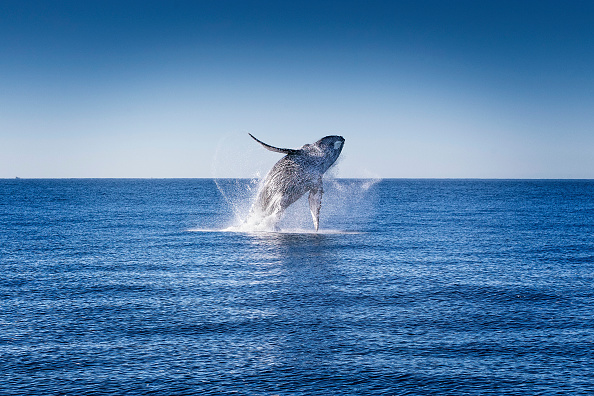

A humpback whale has broken the world record for the longest confirmed migration ever tracked for an individual whale, swimming more than 15,000 kilometres across two oceans.
Scientists made the discovery by comparing tens of thousands of photographs of humpback whale tails, known as flukes. Every whale has unique markings on its tail, similar to a fingerprint, which allows researchers to identify the same animal across different sightings years apart.
One whale was first photographed off Hervey Bay in Queensland, Australia, and was later spotted near São Paulo, Brazil. The straight-line distance between those two breeding grounds is around 14,200 kilometres. But a second whale produced an even more jaw-dropping result. Researchers first photographed it in Brazil in 2003, then spotted the very same whale in Australian waters 22 years later in 2025. The distance between those sightings: 15,100 kilometres, a new world record.
The research involved 19,283 whale tail photos collected over more than 40 years, contributed by both professional scientists and everyday people through a global whale-tracking app called Happywhale.
“These whales were photographed decades apart, by different people, in opposite parts of the world,” said Griffith University researcher Stephanie Stack. “And yet we can connect their journey.”
Despite the incredible distances, these crossings are extremely rare. Out of nearly 20,000 identified humpback whales in the records, only two were found to have made this kind of transoceanic trip. Scientists believe climate change could make such journeys more common in the future, as warming oceans shift where whales find food.

 SMART Prep | Quick Question