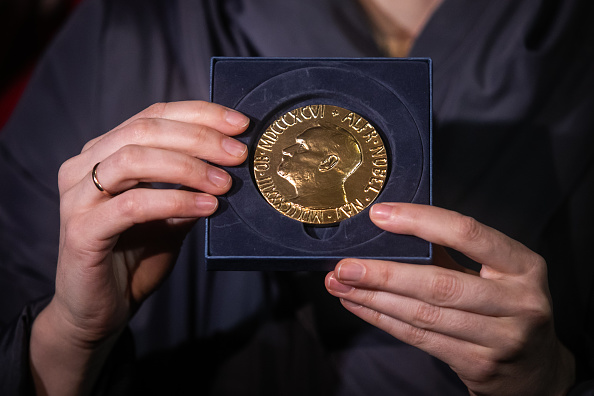

Three scientists have won this year’s Nobel Prize in Medicine for inventing a clever way to switch brain cells on and off using nothing but light.
The prize was announced in Stockholm, Sweden, and is shared between Karl Deisseroth of Stanford University in the US, Peter Hegemann of Humboldt University in Berlin, and Georg Nagel of the University of Würzburg in Germany.
It all started when Hegemann and Nagel studied green algae that swims towards sunlight. They discovered a special protein in the algae that works like a tiny door, opening whenever blue light shines on it and letting electricity flow through.
Deisseroth then took the gene that makes this protein and put it into the brain cells of mice. This gave scientists a way to turn individual nerve cells on and off just by shining a light on them, almost like a remote control for the brain.
The method, called optogenetics, is now used by scientists all over the world to study how the brain works, and how it might be involved in different illnesses.
The three scientists will share prize money worth around NZ$3 million.

 SMART Prep | Quick Question