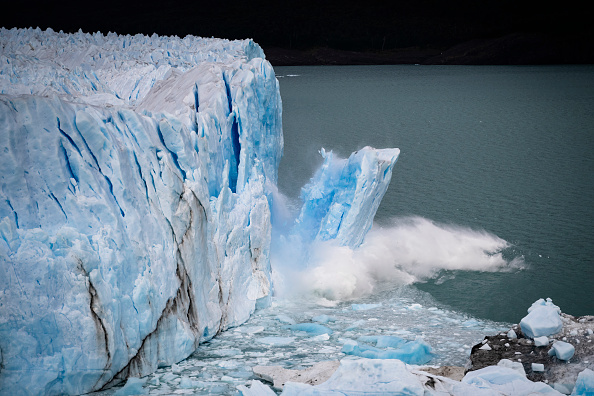

New Zealand’s glaciers have shrunk by 29% since 2000, making them among the fastest-disappearing in the world, according to a new study published in Nature.
Researchers found that glaciers worldwide are retreating more rapidly than before, with New Zealand ranking third in percentage of ice loss. Scientists warn that this trend will likely continue and accelerate if global temperatures keep rising.
The study, which analysed glacier data from 2000 to 2023, showed that glaciers in Central Europe shrank by 39% and those in the Middle East by 35%. The total glacier mass loss worldwide was even greater than the amount of ice lost from Greenland and twice that of Antarctica.
Heather Purdie, a glacier expert from the University of Canterbury, called New Zealand’s glaciers a “canary in the coal mine” for climate change. She explained that their small size and location near warm seas make them particularly vulnerable to rising temperatures, causing them to melt faster than larger glaciers.
Purdie emphasised that scientists have been warning about this issue for decades. She explained that the cause is straightforward: more carbon dioxide in the air leads to higher temperatures, which melts more ice. Despite repeated studies proving this, she expressed frustration that meaningful action to reduce emissions is still lacking.
The shrinking glaciers also have serious consequences for New Zealand’s economy. They are crucial sources of freshwater and attract tourists for alpine adventures. As the ice disappears, guides find it harder to access mountain peaks, and loose rock left behind increases the risk of rockfalls and avalanches.
For Māori, mountains are sacred taonga, and their changing shape is a profound cultural loss. Purdie warned that without significant reductions in greenhouse gas emissions, New Zealand’s glaciers will continue to vanish, altering the landscape and threatening both nature and human livelihoods.

 SMART Prep | Quick Question