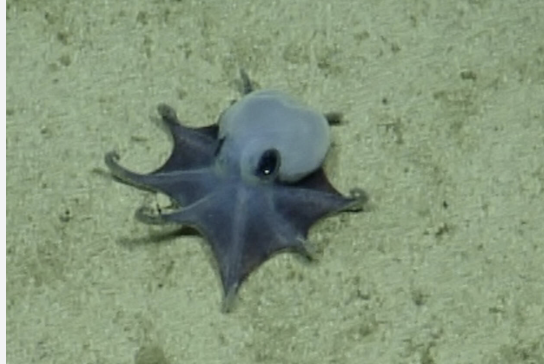

Scientists have officially identified a brand-new species of octopus found nearly 1,800 metres beneath the ocean near the Galápagos Islands, and it is roughly the size of a golf ball.
The creature, named Microeledone galapagensis, was first spotted in 2015 by a robotic submarine exploring the deep seafloor near Darwin Island, part of the Galápagos archipelago off the coast of Ecuador. When the camera picked up the little animal crawling across the ocean floor, the scientists watching remotely were immediately excited.
“He’s tiny! It’s blue!” one researcher was recorded exclaiming when the octopus appeared on screen.
The species has now been officially confirmed after years of careful study, led by octopus expert Janet Voight at the Field Museum in Chicago. Its vivid blue colour on the back is thought to be one of the rarest colours found in nature. The underside is a deep purple, which scientists believe helps the octopus hide the glow of any light-producing prey it catches, protecting itself from predators. The octopus also has short, stubby arms with only a single row of suckers, which sets it apart from most other species.
The Galápagos Islands are famous for remarkable wildlife found nowhere else on Earth, including giant tortoises and marine iguanas. Darwin Island itself is named after the English scientist Charles Darwin, whose visit to the Galápagos in 1835 helped him develop his famous theory of evolution.

 SMART Prep | Quick Question