
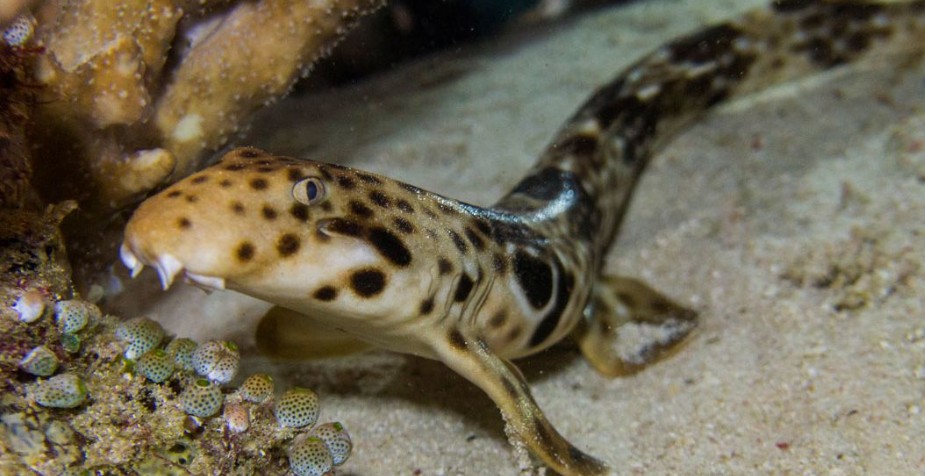

Scientists have discovered a new species of shark in Milne Bay, Papua New Guinea, during a night dive in shallow water. The shark is a type of epaulette shark, a small shark known for using its fins to move across the sea floor. Local people had already known about the unusual fish and called it Kadedekedewa, meaning “lazy shark” or “dog shark”. The discovery was made by a team including Dr Christine Dudgeon from the University of the Sunshine Coast in Queensland, Australia.
Dr Dudgeon first spotted the metre-long shark swimming in shallow seagrass on top of a coral mount. At first, she thought it might be one of the nine walking shark species already known to science. When the team looked more closely, they saw that its markings were different, with white dashes and brown speckles across its body. Over the next two nights, they found eleven more sharks with the same pattern.
Walking sharks can swim, but they also use their two pectoral fins and two pelvic fins like little feet. This helps them move along sand and between shallow rock pools when the tide is low. They mostly do this at night, when they are less likely to be caught by seabirds. The sharks are harmless to humans and eat small animals such as snails, crabs and worms.
Later genetic tests confirmed that the shark was a new species, the tenth known species in its group. It was named Hemiscyllium dudgeonae in honour of Dr Dudgeon. Scientists say the shark may be at risk because it lives in a small area and does not travel far from where it is born. Local communities in Papua New Guinea are helping to protect these special sharks by creating marine protected areas.

 SMART Prep | Quick Question