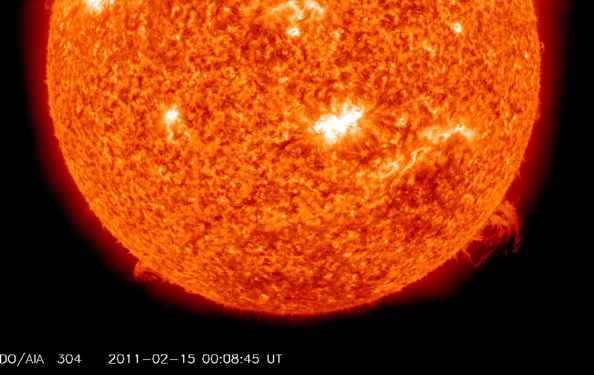

Scientists from The European Space Agency (ESA) and NASA have released the clearest and most detailed image of the Sun ever taken. It was captured by the Solar Orbiter, a special satellite launched in February 2020 by the ESA and NASA. The satellite was built to take close-up pictures of the Sun and study how it behaves.
The new image is made from 200 individual photos taken from about 48 million miles away. These photos were taken in ultraviolet light, which shows parts of the Sun we can’t see with our eyes. The final picture reveals glowing loops of energy, called coronal loops, and a dark line known as a filament, made of cooler gas.
The Solar Orbiter is the most complex science lab ever sent to the Sun. It carries ten instruments that help scientists observe the Sun’s surface, its hot outer layers, and the solar wind—streams of charged particles that rush out into space. These winds can cause stormy space weather that sometimes affects Earth.
What makes this mission even more special is that it’s the first to study the Sun’s polar regions. By doing so, scientists hope to better understand how the Sun works and why parts of it get so hot. The mission could also help us predict when solar storms might happen in the future.

 SMART Prep | Quick Question