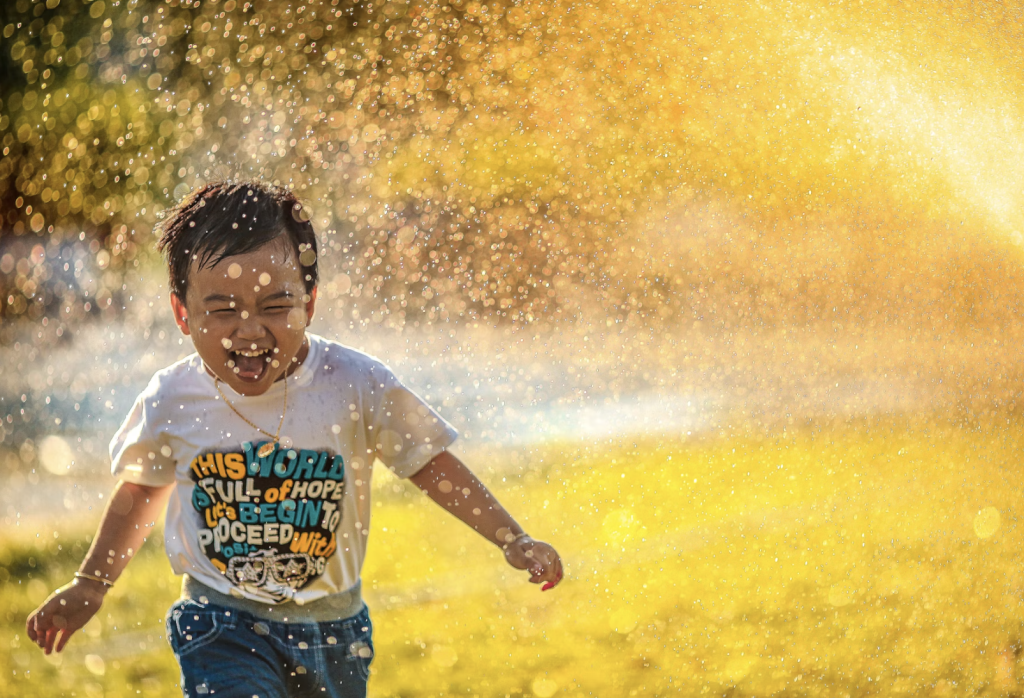

Happiness does not always just appear.
Some days you wake up feeling great, other days your sock feels weird, your breakfast goes wrong, your friend is away, and your brain decides the whole day is ruined.
Not great.
That’s where practice comes in.
Happiness is a bit like fitness – you do not get stronger by doing one star jump and calling it a day, you get stronger by practising again and again.
Your happiness works in a similar way.
The more you practise looking for the good, doing things you enjoy, and choosing helpful thoughts, the easier it becomes for your brain to feel happier more often.
So, how do you practise happiness?
One way is to make time for play.
Yep. Play.
Play is not just something little kids do, it is something everybody needs. When you play, your brain gets a break from worrying, overthinking, and trying to get everything right.
You might kick a ball around outside, play a board game, build something, draw, swim, climb, run, laugh with your friends, or make up a silly challenge at home.
It does not have to be fancy, it just has to be fun.
Wait, playing can help your brain?
Yes!
When you’re having fun, your body and brain can relax. You might feel lighter, you might think more clearly, you might even find it easier to be kind, brave, or creative afterwards.
That is why play is not a waste of time, it’s a happiness tool.
Another great happiness tool is dancing.
You do not have to be the best dancer in the room, you do not even have to be good, you just have to move.
Dance in your bedroom. Dance in the lounge. Dance while you tidy up. Dance like no one is judging your moves, because hopefully they are too busy joining in.
Moving your body can help shift your mood. A grumpy brain often finds it harder to stay grumpy when your body is jumping, spinning, or doing your best robot dance.
The big idea is simple: the more you practise happiness, the easier it becomes.
That does not mean every day will be perfect. It does not mean you will never feel sad, worried, or annoyed – those feelings are normal too.
It means you can learn simple ways to help yourself feel better.
Play a game. Move your body. Look for one good thing. Choose one helpful thought. Do one kind action.
Small things count.
And the more you practise them, the more your brain starts to remember; there are good things here too.
So next time your day feels a bit wobbly, try giving happiness a little practice.
Your brain might just join in.

 SMART Prep | Quick Question