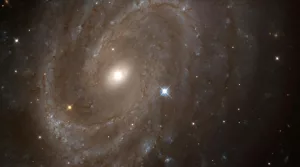


For the first time ever, scientists might have directly watched one star swallow up a smaller star right next to it, in a galaxy far, far away.
The giant star, nicknamed “Bao,” is a red giant about 2.5 million light-years away in the Andromeda galaxy. It is seven times heavier than our sun, and a huge 350 times wider.
Scientists first noticed the star getting brighter back in 2018. By 2023, using special telescopes in the United States, they could see it was definitely growing more luminous. Then, near the end of 2025, they spotted a massive eruption of light coming from the star.
NASA’s powerful James Webb Space Telescope studied the star just 47 days after that eruption, giving scientists important clues. They believe a smaller companion star, about 70 percent as heavy as our sun, spiralled into the giant star’s centre, causing a huge explosion.
“Catching a star engulfing its companion in the act is very difficult,” said lead scientist Viraj Karambelkar, from Columbia University in the United States.
“When a star engulfs its companion, its effect is very subtle, like throwing a bucket of water in a large ocean,” he said. “I was absolutely flabbergasted when we saw this.”
Karambelkar said the discovery proves something scientists had only guessed at before. “I can’t wait to find more,” he said.

 SMART Prep | Quick Question