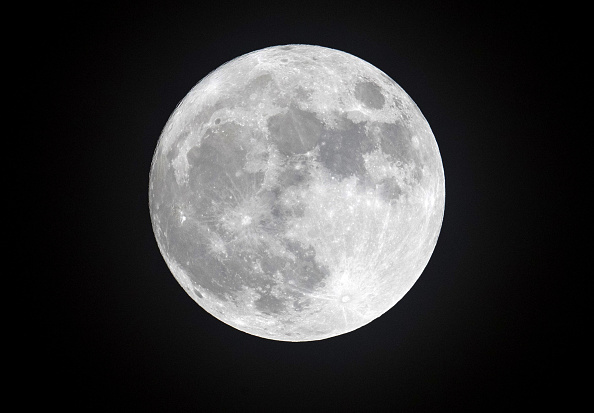
Scientists have discovered that two enormous craters on the Moon were formed in just minutes after a massive asteroid impact around 3.8 billion years ago.
These craters, Vallis Schrödinger and Vallis Planck, are located near the Moon’s south pole on the far side that always faces away from Earth. The sizes of these craters are comparable to the Grand Canyon, but instead of forming over millions of years, they were blasted out by rocky debris traveling at extreme speeds.
Vallis Schrödinger is about 270 kilometres long and 2.7 kilometres deep, while Vallis Planck is similar in length but even deeper at 3.5 kilometres. The asteroid that struck the Moon sent debris flying at speeds of 1 kilometre per second, with some chunks measuring as much as 5 kilometres across. Scientists used data from NASA’s Lunar Reconnaissance Orbiter to map the area and study the impact.
This research could help NASA choose locations to collect lunar samples during future missions, like the Artemis III mission, which plans to send astronauts to the Moon’s south pole. By understanding these ancient impacts, scientists hope to uncover more about the Moon’s history and the forces that shaped its surface.