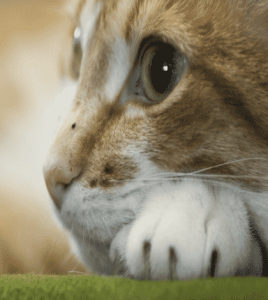


If your cat keeps meowing at you, it might be asking for a hand. A new study from the University of São Paulo in Brazil has found that cats use meows, along with eye contact, to ask their owners for help.
The researchers visited 38 cats in their own homes. Each cat was given a treat trapped inside a small plastic box with holes in it, so it could see and smell the snack but couldn’t get it out by itself.
When a person was in the room, the cats meowed 85 times, compared with just 20 times when they were alone. That’s about four times as many. Overall, the cats were 16 times more likely to meow when a human was around.
With no person nearby, the cats mostly stayed quiet, stood still and stared at the door. When a person was there, the cats meowed while looking straight at them, and kept glancing back and forth between the human and the box.
The researchers also found that feral cats meow much less than pet cats. Feral cats live on their own and don’t belong to anyone.
The study was published in the journal Animal Behaviour. It says meowing isn’t just a cat showing how it feels. It plays a “communicative role”, which means it’s a way for cats to talk to people.
So next time your cat meows and stares at you, it may simply be asking for a little help.
Te Reo Māori
Pānui: Ka miau ngā ngeru hei tono āwhina i te tangata
Mēnā ka miau tonu tō ngeru ki a koe, tērā pea kei te tono āwhina ia. Kua kitea e tētahi rangahau hou nā te University of São Paulo i Parīhi, ka miau ngā ngeru, ka titiro hoki ki ngā kanohi, hei tono āwhina i ō rātou rangatira.
I toro atu ngā kairangahau ki ngā ngeru e 38 i ō rātou ake kāinga. I hoatu he kai reka ki ia ngeru, kua mau i roto i tētahi pouaka kirihou iti he kōputaputa ōna. Ka kite, ka hongi te ngeru i te kai, engari kāore e taea e ia anake te tango mai.
I te wā he tangata i roto i te rūma, e 85 ngā miau a ngā ngeru, engari e 20 noa iho i te wā i a rātou anake. Tata ki te whā whakareatanga te nui ake. Ina whakarāpopotohia, e 16 whakareatanga te nui ake o te tūponotanga ka miau ngā ngeru mēnā he tangata kei reira.
Ki te kore he tangata i te taha, i noho wahangū te nuinga o ngā ngeru, i tū mārie, ā, i titiro atu ki te kūaha. I te wā he tangata kei reira, i miau ngā ngeru me te titiro tika atu ki taua tangata, ā, i huri haere tō rātou titiro i waenganui i te tangata me te pouaka.
I kitea anō e ngā kairangahau he iti ake te miau a ngā ngeru mohoao i tō ngā ngeru mōkai. Ka noho motuhake ngā ngeru mohoao, ehara i te mōkai a tētahi.
I tāngia te rangahau ki te hautaka Animal Behaviour. E ai ki te rangahau, ehara te miau i te whakaatu noa a te ngeru i ōna kare-ā-roto. He “tūranga whakawhitiwhiti kōrero” tōna, arā, he huarahi mā ngā ngeru hei kōrero ki te tangata.
Nō reira, ā muri ake nei, ina miau tō ngeru me te titiro mai ki a koe, tērā pea kei te tono āwhina noa iho ia.

 SMART Prep | Quick Question