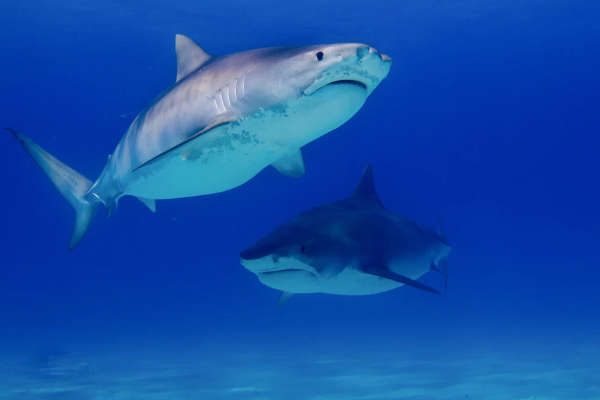

Scientists in the United States are testing whether sharks can help improve hurricane predictions. Researchers from the University of Delaware are attaching small electronic sensors to sharks along the US East Coast. The sensors collect information about ocean temperature, depth and salt levels. Scientists hope the information will help them understand how powerful hurricanes could become before they reach land.
The devices are called CTD tags and can collect data as sharks swim and dive. The tags are attached to the sharks’ dorsal fins and can send information to satellites when the animals reach the surface. Researchers are particularly interested in the temperature of the upper layer of the ocean. Warmer water in this layer can provide more energy for hurricanes and may make them stronger.
Scientists are studying several shark species, including shortfin makos, blue sharks, smooth hammerheads and young great white sharks. Researchers choose sharks that travel widely and come to the surface often enough for the tags to send information. The tagging process usually takes less than five minutes. Scientists check each shark’s health before releasing it back into the ocean.
The tags are designed to eventually fall off as the materials holding them break down. Researchers hope the information collected by sharks will improve hurricane forecasts for communities along the US East Coast. Better forecasts could help people prepare for powerful storms.

 SMART Prep | Quick Question