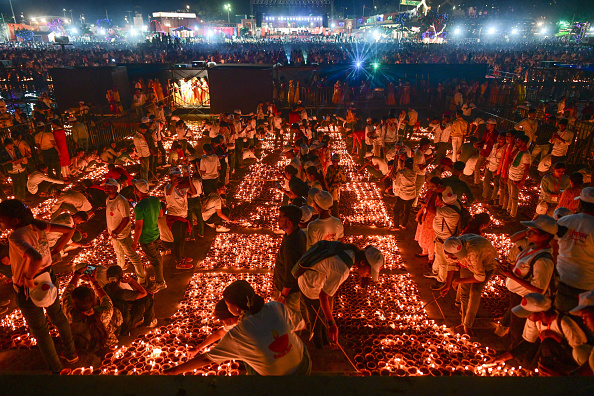

A thick, toxic smog covered India’s capital, New Delhi, on Monday 9 November 2026. People had set off fireworks the night before to celebrate Diwali.
Diwali is the Hindu festival of lights. Fireworks are a big part of the celebrations, even though there were rules to limit them this year.
On Monday morning, the Air Quality Index went above 350 in several parts of the city. This scale measures how polluted the air is, and that level counts as “severe”, the worst category. Haze settled over the streets and tall buildings, making it hard to see.
In October, India’s Supreme Court allowed only special “green firecrackers”, and only during three-hour time slots on Saturday and Sunday. However, even these still put tiny bits of dust and other pollution into the air.
More than 30 million people live in and around New Delhi, about six times the population of New Zealand. It is often ranked among the world’s most polluted places in winter.
Fireworks aren’t the only problem. Smoke from farmers burning leftover crops in the nearby states of Punjab and Haryana drifts towards the city, and cars, factories and building sites add even more. At this time of year, cool temperatures and light winds mean the dirty air doesn’t blow away, so the haze can hang around for days.
The government has limited building work and the use of diesel generators, but bad pollution still comes back every year. Environmental experts say cleaner energy and tougher rules on car fumes are needed to fix it for the long term.

 SMART Prep | Quick Question