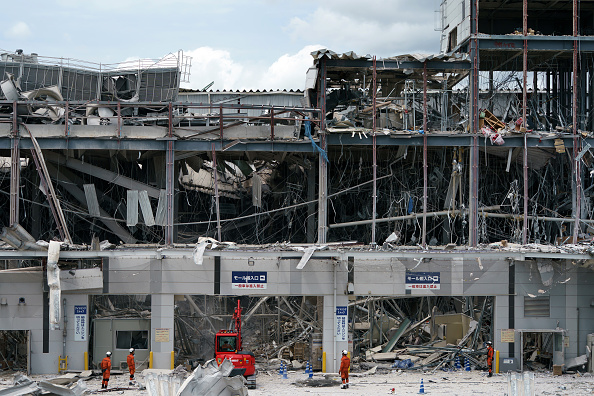

A magnitude 7.1 earthquake struck south-west Japan on Tuesday, injuring several people and triggering a brief tsunami advisory that was lifted within an hour. The quake hit inland on Kyushu Island at 4.27pm local time, and more than 150,000 people were asked to move to evacuation shelters for safety.
Japan’s meteorological agency warned that strong aftershocks were likely because the earthquake’s centre was very shallow, only 10 kilometres underground. National broadcaster NHK showed footage of cracked roads and bridges, along with several buildings on fire. Prime Minister Sanae Takaichi said officials were still working out how much damage had been caused, but confirmed that a number of people had already been injured.
About ten of the injured came from an elderly care home, and at least 50 people were being treated in hospital. Train services were suspended and electricity was cut off for thousands of homes across the region. Chief Cabinet Secretary Minoru Kihara said emergency teams, including the self-defence force, fire services and coast guard, had been sent to help, and he urged residents to listen carefully to evacuation instructions on the radio, television and internet.
Japan sits on the Pacific Ring of Fire, a zone known for frequent earthquakes and volcanic activity, and experiences around 1,500 quakes every year. A magnitude 7.5 earthquake in north-east Japan last December left 30 people injured, while a huge magnitude 9 earthquake in March 2011 caused a devastating tsunami that changed the way the country prepares for natural disasters.

 SMART Prep | Quick Question