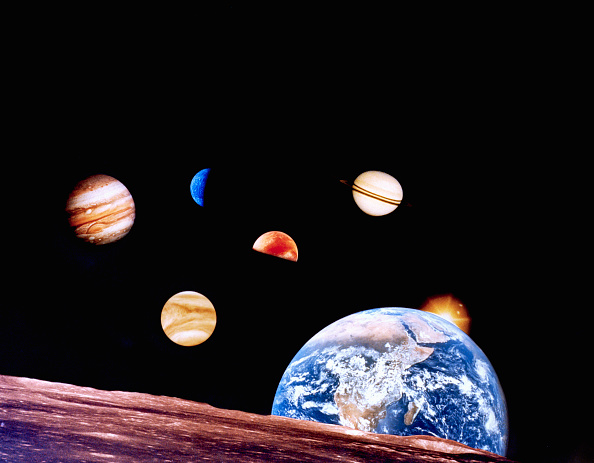

Six planets lined up in the night sky on Saturday, creating a rare sight that people around the world enjoyed if the weather was clear.
According to NASA, Mercury, Venus, Saturn and Jupiter will be visible without special equipment, while Uranus and Neptune will need binoculars or a telescope.
The planets appear in a line because they all travel around the Sun in set paths, called orbits. Sometimes, these orbits bring them into positions where they seem to line up from Earth. Scientists say the best time to look was during twilight, either just after sunset or before sunrise.
Venus was the easiest to spot. It shines very brightly with a steady white glow and is the brightest object in the sky after the Sun and Moon. Mars looked like a small red dot, while Saturn appeared slightly yellow.
Mercury was the trickiest planet to find. It appeared low on the horizon about 30 to 60 minutes after sunset and looked like a small white point of light.
Heading away from city lights made for the clearest view.

 SMART Prep | Quick Question