

Nasa has just confirmed its 6,000th exoplanet – a planet that orbits a star outside our Solar System. This is a huge milestone in space exploration, showing just how many worlds exist far beyond Earth.
The first exoplanet like this was found in 1995. Called 51 Pegasi b, it’s a gas giant similar to Jupiter. Since then, scientists have been finding new planets at a fast pace—just three years ago, the total reached 5,000!
Exoplanets are very hard to spot because stars are so much brighter. It’s like trying to see a tiny insect flying near a floodlight from miles away. That’s why scientists use clever methods like the “transit method”—watching a star dim slightly as a planet crosses in front of it—or “gravitational microlensing,” which detects how a planet bends a star’s light with its gravity.
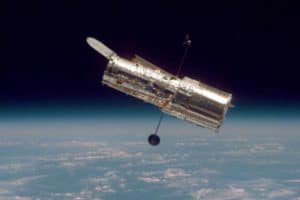
Nasa uses powerful telescopes like Kepler and TESS, and new tools like the James Webb Space Telescope to help study these faraway planets. More than 8,000 possible exoplanets are still waiting to be confirmed.
So far, scientists have found:
Over 2,000 Neptune-like planets
Nearly 2,000 gas giants like Jupiter
More than 1,700 “super-Earths” (bigger than Earth but smaller than Neptune)
Around 700 rocky planets like Earth or Mars
And seven planets that are still a mystery
Nasa says the search is far from over. The next goal is to find a planet truly like Earth—one that could possibly support life.
“Each planet teaches us something new,” said Nasa’s Dawn Gelino. “And maybe, one day, we’ll find a world just like ours.”

 SMART Prep | Quick Question