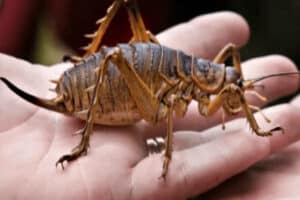


New Zealand’s giant wētāpunga, one of the heaviest insects in the world, are making a comeback thanks to a long-running conservation programme at Auckland Zoo.
Wētāpunga are ancient, flightless insects found only in New Zealand. They once lived across much of the North Island but were wiped out almost everywhere by introduced predators like rats and stoats.
To help save the species, Auckland Zoo staff travelled to Te Hauturu-o-Toi/Little Barrier Island in the Hauraki Gulf to collect a small group of “founder” wētāpunga to breed from, working alongside mana whenua Ngāti Manuhiri.
Female wētāpunga can lay between 100 and 300 eggs at a time, and the young insects take 15 to 24 months to grow into adults, going through 10 different stages along the way.
Nearly 8,000 wētāpunga bred at the zoo have now been released onto predator-free islands in the Hauraki Gulf and the Bay of Islands, spreading the species across eight islands in total.
Auckland Zoo said keeping the whole species in just one place was risky, because bad weather, disease or predators could wipe them all out at once.
“Having an entire species confined to one location is extremely risky, as extreme weather, disease and predators can so easily bring about a rapid decline,” the zoo said.
Spreading wētāpunga across more predator-free islands gives this giant, ancient insect a much better chance of surviving for generations to come.

 SMART Prep | Quick Question