
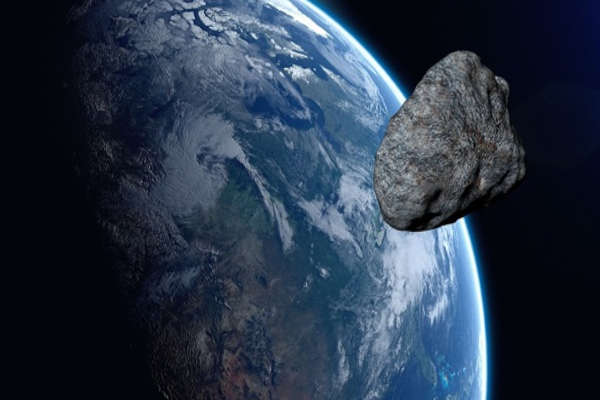

A newly discovered asteroid is set to zoom past Earth this week, and scientists say there is absolutely nothing to worry about.
The space rock, named 2026 JH2, was first spotted last week by astronomers at the Mount Lemmon Observatory in Arizona, USA. It is estimated to be between 16 and 35 metres wide, which is roughly the length of a five-a-side football pitch.
The asteroid is classified as a near-Earth asteroid, meaning it passes close to our planet’s neighbourhood in space. On Monday evening, it will come within about 50,000 miles of Earth, which is around a quarter of the distance between Earth and the Moon. That might sound close, but astronomers have confirmed there is zero chance of it hitting us.
2026 JH2 is too faint to see with the naked eye, but people with a telescope may be able to spot it from some parts of the world as it makes its closest pass.
You might be wondering what makes an asteroid different from a comet. Asteroids are large chunks of rock that orbit the Sun and are much smaller than planets. Comets also orbit the Sun, but they are made of ice and dust rather than rock, a bit like a giant dirty snowball. When a comet gets close to the Sun, the heat melts the ice and creates a glowing tail stretching across the sky.
Near-Earth asteroids like 2026 JH2 are tracked carefully by scientists around the world. Discovering them early gives experts plenty of time to study their paths and make sure Earth stays safe.

 SMART Prep | Quick Question