

NASA’s James Webb Space Telescope has captured a breathtaking new image of a galaxy 45 million light-years away, showing its blazing centre in stunning detail.
The galaxy, known as Messier 77, sits in the Cetus constellation (named after a whale) and is one of the brightest of its kind in the night sky. To put the distance in perspective, one light-year is roughly 9.5 trillion kilometres, so 45 million of them is almost impossible to imagine.
At the heart of Messier 77 is a supermassive black hole, eight million times more massive than our Sun. Gas swirling around the black hole gets pulled into a tight orbit and heated to extreme temperatures, causing it to glow intensely. Webb’s mid-infrared instrument was able to capture this brilliant activity in remarkable clarity. What makes the image so impressive is how brightly the galaxy’s nucleus shines, outglowing everything else around it.
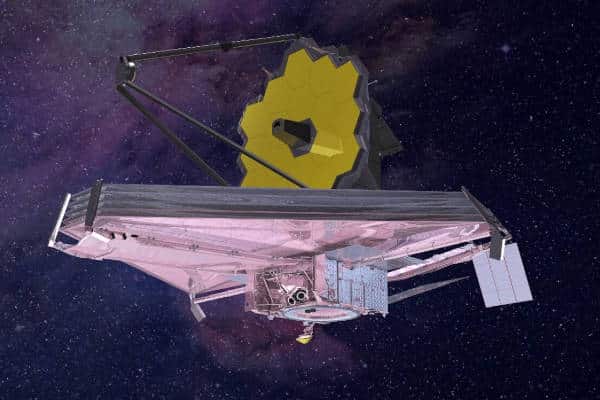
The James Webb Space Telescope is the largest and most powerful space telescope ever built. Since launching in 2021, it has been photographing deep space and giving scientists a look at galaxies, stars, and other cosmic structures that were previously too far or too faint to study clearly.

 SMART Prep | Quick Question