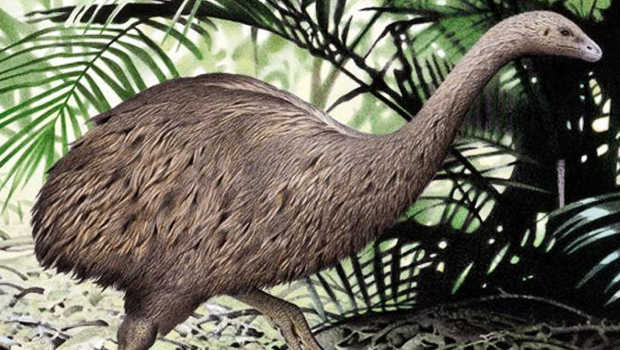

Moa were giant, flightless birds that lived in New Zealand until about 500 years ago.
In the 1930s, farmers and scientists uncovered many moa bones and even an egg, shedding new light on these extinct creatures. Some discoveries suggested that moa may have lived alongside Māori people longer than previously thought.
In 1934, The New Zealand Herald reported that hundreds of moa bones were found in a swamp on a Canterbury farm. Experts believed the birds might have run into the swamp to escape fires or were herded there by early hunters. A large-scale excavation at Makirikiri, near Wanganui, uncovered 2,000 moa bones, well-preserved due to the swamp’s muddy conditions. Scientists thought the area might have once been a thermal spring where moa fed.
Another discovery in Ashwick Flat, Canterbury, revealed the remains of at least a dozen moa. These birds might have died in a massive tussock fire or were driven into the swamp by Māori hunters.
A particularly exciting find came in 1936 when a fossilised moa egg was discovered at “The Caves” near Craggy Range. Dr. A. G. Clark, an expert from Napier, confirmed it was a moa egg and noted the presence of gourd remains nearby. Since Māori introduced gourds to New Zealand, this suggested that moa were still alive when Māori arrived—challenging earlier beliefs that moa had already gone extinct.

 SMART Prep | Quick Question