
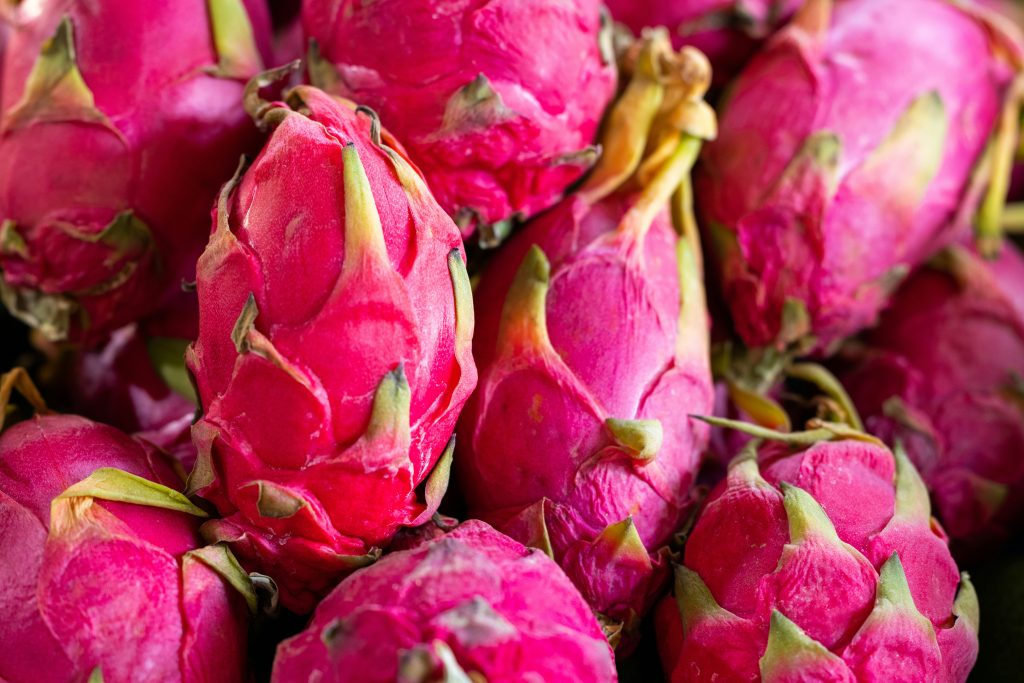

Dragon fruit could become a new fruit choice for New Zealand lunchboxes, according to researchers testing it in Kerikeri, Northland. The trial is looking at smaller, sweeter dragon fruit varieties that may grow well in the region’s changing climate. Scientists say the fruit has done better than expected, especially when grown under cover. They believe it could become an important new crop for local growers in the future.
Dragon fruit has bright pink-red skin, a rounded shape and a gentle sweet taste. In 2013, New Zealand began working with Vietnam to develop new dragon fruit varieties with better flavour, stronger disease resistance and a longer shelf life. This work led to a trial orchard in Northland, where researchers planted three new cultivars. Dr Satish Kumar said the project is helping New Zealand prepare for possible climate changes in the years ahead.
The plants are being grown both outside and inside plastic tunnel houses. The tunnel system helps protect the crop from winter cold and heavy rain, which have become more intense in Northland. In tropical countries, dragon fruit can fully produce fruit in about three years and be harvested five times a year. In New Zealand, the plants have taken about four years and currently produce only two harvests each year.
Researchers hope the tunnel houses will improve yields and fruit quality, while also making the plants easier for workers to handle because they are less prickly. Northland Inc has also been studying other unusual crops, such as papaya, pineapple, turmeric and ginger, for the region. A 2025 report suggested protected growing systems could create real opportunities for farmers. The dragon fruit trial is still in its early stages, but companies are already preparing a brand and marketing plan for when the fruit is ready for sale.

 SMART Prep | Quick Question