
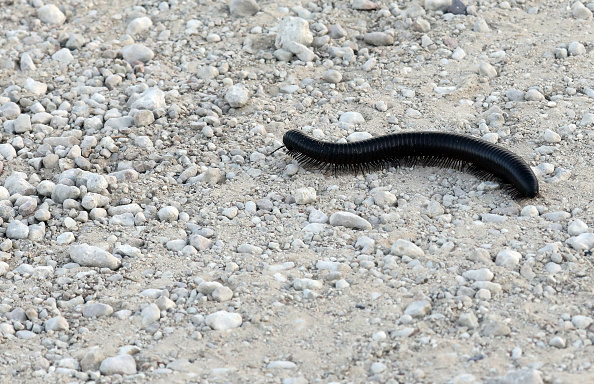

Residents on the south coast of Wellington are trying new ways to stop large numbers of Portuguese millipedes that have been crawling into homes over the past year. People living in areas such as Ōwhiro Bay say the insects often appear after rain and can be found in shoes, bags and even beds.
The small black millipedes have been spreading in several places around New Zealand, including Wellington, New Plymouth and Nelson. Although they are annoying, the Ministry for Primary Industries does not currently list them as a pest that needs official control.
Because of this, some residents have decided to try their own solutions. One idea is to use very tiny worms called nematodes to reduce the number of millipedes.
These microscopic worms enter the millipedes’ bodies and reproduce inside them. Over time, the worms kill the host, which could help lower the population.
A new resident in Ōwhiro Bay said he was shocked by how many millipedes were around his home. He said they seemed to be “pouring out of the soil”, especially after heavy rain.
The resident plans to release a type of nematode called Heterorhabditis bacteriophora in his garden. He hopes the worms will help control the insects and possibly help other neighbours with the same problem.
Scientists at Victoria University are also studying another type of nematode called Steinernema feltiae. They are testing whether it could safely control the millipedes.
The results from the university study are expected in a few weeks. In the meantime, some residents have already begun trying the worms in their gardens.
One local resident said it may take time to see results. They also noted that millipede numbers often grow larger during autumn and spring.

 SMART Prep | Quick Question