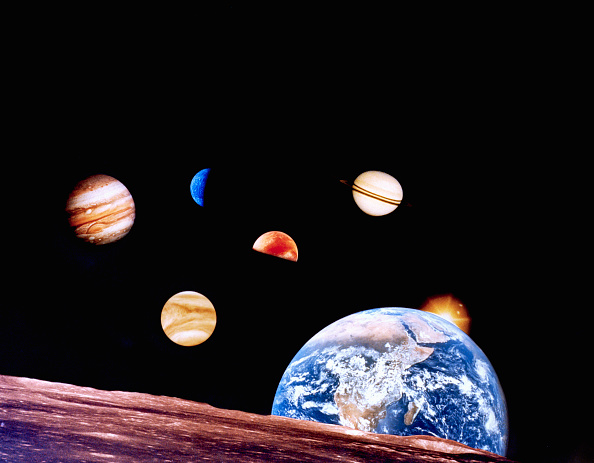

Stargazers in New Zealand have a rare opportunity to see all seven of the other planets in the solar system lined up in the night sky.
This event, called a “grand planetary alignment,” will be visible for a few minutes just after sunset on Wednesday, Thursday, and Friday. The next chance to see this phenomenon won’t come until 2040.
To spot the planets, viewers need a clear, unobstructed view of the horizon from west to east. Most planets will appear near the setting sun in the west, with a few in the north and northeast. A high vantage point and clear skies will help in viewing.
Venus, Jupiter, and Mars will be the easiest to see without a telescope because they shine brightly and don’t twinkle like stars. Uranus and Neptune, however, require binoculars or a telescope. Mercury and Saturn will be low on the horizon, making them harder to see without special equipment.
Weather conditions could affect visibility. Northern areas like Auckland and the Bay of Plenty may experience clear spells with isolated showers, while much of the North Island is expected to be cloudy. The South Island has mixed conditions, with some cloud cover and drizzle in certain areas.
With only a short window to see this celestial event, astronomers recommend heading outside as soon as the sun sets and looking toward the western sky.

 SMART Prep | Quick Question