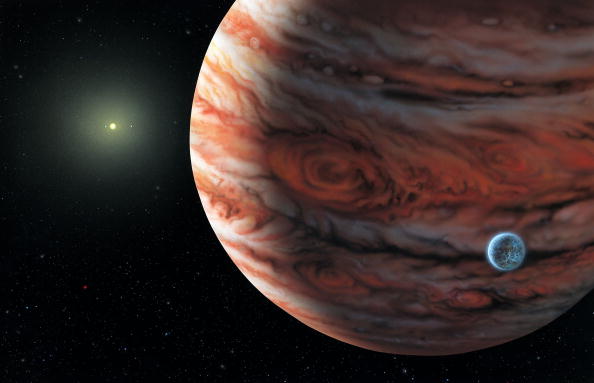
Scientists have discovered that Ganymede, the largest moon in the solar system, was struck by a massive asteroid over 4 billion years ago.
This impact was even more powerful than the asteroid that wiped out the dinosaurs on Earth 66 million years ago. Researchers from Kobe University in Japan studied the scars and craters on Ganymede’s surface and used computer simulations to estimate that the asteroid was about 300 km wide.
The asteroid’s impact was so strong that it caused Ganymede to spin, leaving the crater facing away from Jupiter. This discovery was published in the journal Scientific Reports and highlights the incredible force of the collision. Ganymede, which is bigger than the planet Mercury, has a unique furrow system that the researchers have been examining for some time.
Future missions, like the European Space Agency’s Juice spacecraft, aim to learn more about Ganymede. Juice launched last year and is expected to reach Jupiter in 2031. It will explore three of Jupiter’s moons, including Ganymede, to see if they could support human life. Ganymede is particularly interesting because it might have a vast underground ocean and is the only moon with its own magnetic field, creating beautiful auroras that glow around its poles.
These findings not only reveal Ganymede’s violent past but also give scientists clues about the moon’s potential to support life in the future.


 SMART Prep | Quick Question