
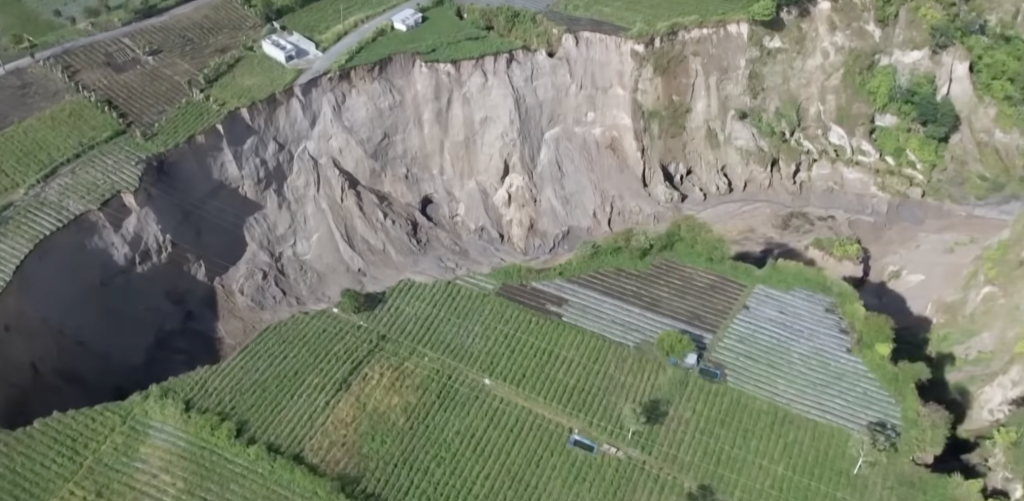

A huge sinkhole has appeared in Indonesia, and officials say it has grown larger in recent months.
The hole is thought to cover about three hectares, which is roughly the size of four Premier League football pitches. Authorities believe landslides and shifting soil have helped the sinkhole spread. The sinkhole has already damaged farmland in the area. Crops including chilli plants and sugar cane have been destroyed, which could affect local farmers’ incomes.
A sinkhole forms when the ground suddenly collapses, leaving a deep opening on the surface. This can happen when heavy rain soaks into the earth and slowly dissolves rock underground. As the rock washes away, the land above it can no longer stay supported.
Sinkholes are rare, but they are more likely in places with softer rocks such as chalk or limestone below the surface. Local residents said the sinkhole expanded quickly after serious flooding at the end of last year.
Geologists who surveyed the area found that rock and sand underneath could absorb groundwater easily. That makes the sides of the sinkhole more likely to crumble without warning.
To keep people safe, a barrier has been placed near the edge to stop residents from getting too close.

 SMART Prep | Quick Question